Conserve
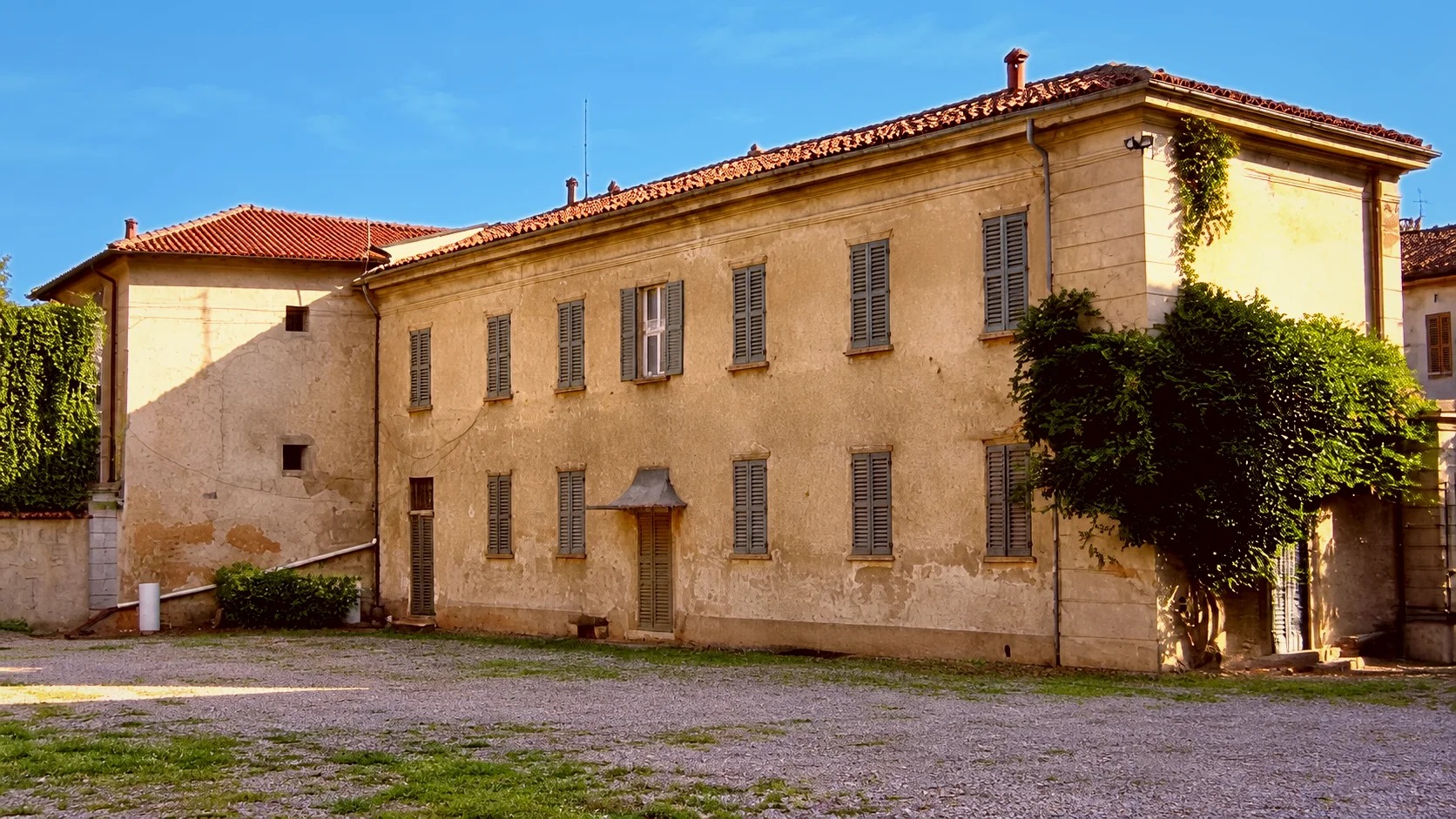
First of all, halt the decay. Roofs, plasterwork, painted ceilings: every intervention will be studied with the Soprintendenza (the State heritage authority) and begun only with its authorisation.
For years its rooms stood silent. The putti painted on the ceilings kept playing for no one. Now someone has opened the windows again.
A family has taken the villa into its care. Patiently, it will bring the house back to its former splendour and return it, one step at a time, to the life of Verderio.
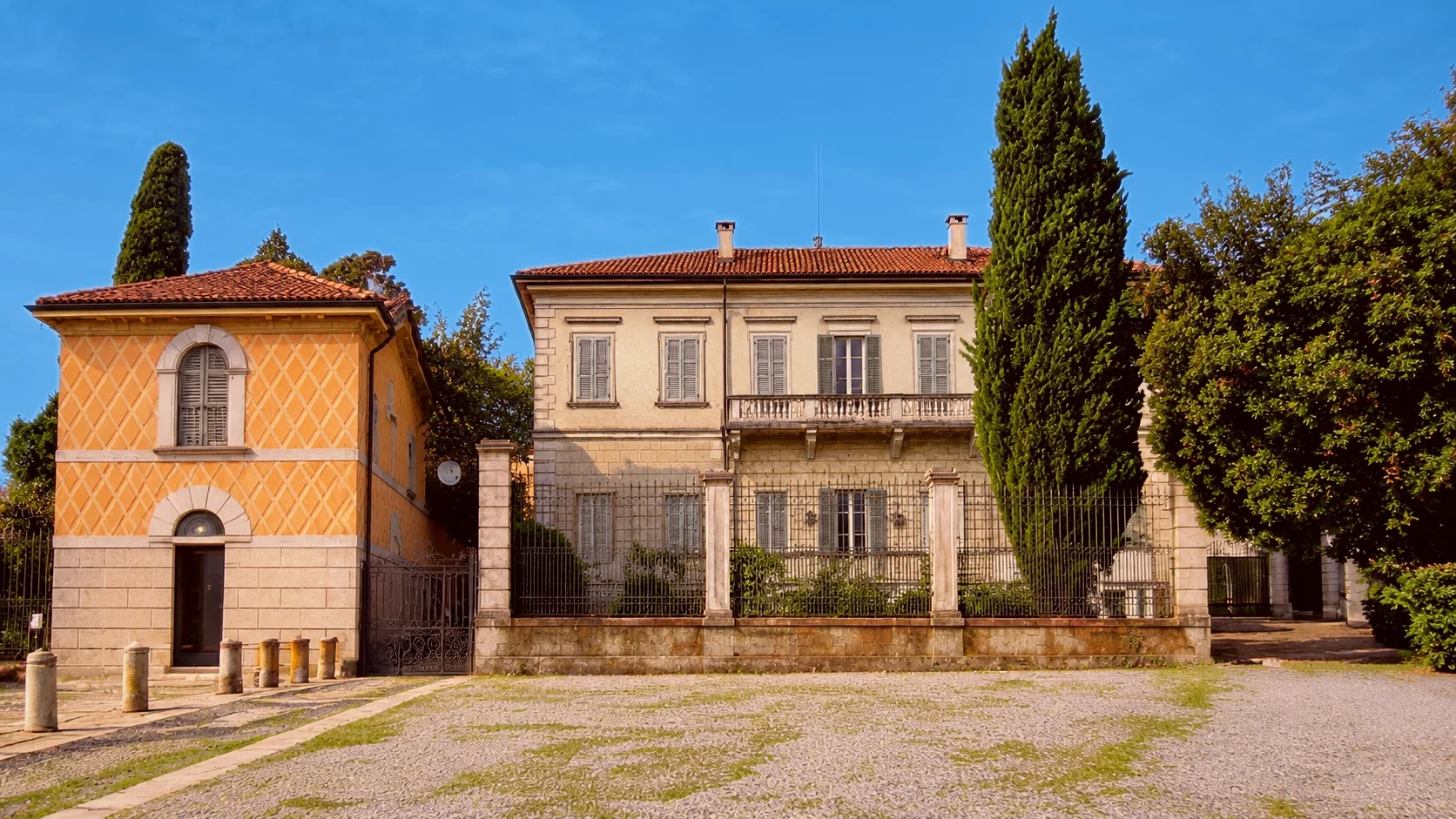
The villa stands in the historic centre of what was once Verderio Superiore. Behind it opens an English landscape park of about twelve thousand square metres. Since 2007 the State has recognised the villa and its park as cultural property of particularly important historic and artistic interest.
The first work cannot be seen. Keeping the water out, protecting the painted ceilings, studying every room before touching it. Restoration will come later, and it will take the time a four-hundred-year-old house deserves.
The villa and its parkFour commitments, in the order we will take them on. The first comes before everything else.
First of all, halt the decay. Roofs, plasterwork, painted ceilings: every intervention will be studied with the Soprintendenza (the State heritage authority) and begun only with its authorisation.
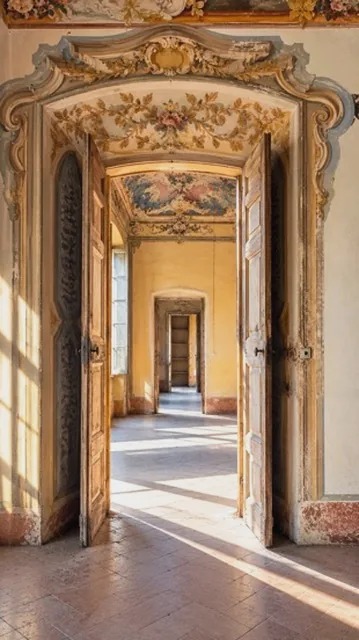
The frescoed rooms will be seen again. We want to make them a place of culture open to the public, where the story of the villa and of Verderio can be told.
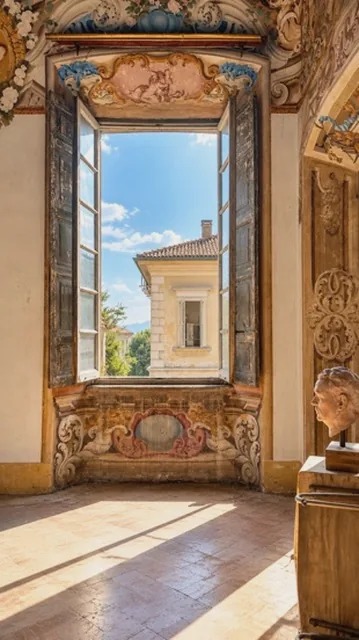
A villa survives when it is lived in every day. The project includes spaces for hospitality and gathering, which will give it a daily life and the means to sustain itself over time.
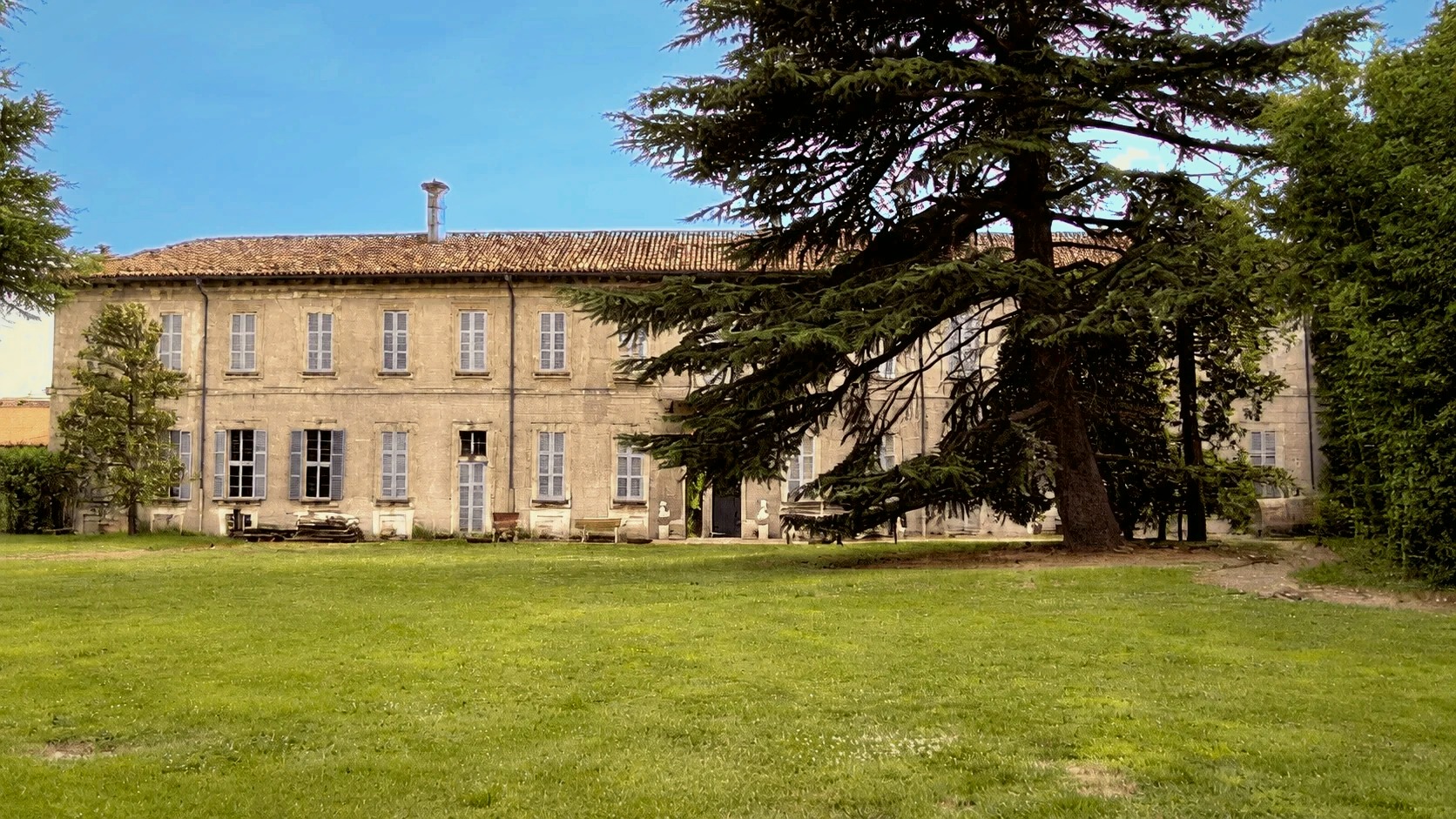
Twelve thousand square metres in the English manner, with cedars, magnolias, yews and plane trees. We will care for it as part of the villa, and we want it to become part of village life again, in the ways its protection allows.
The images are design visualisations. Read the notice
Archives, surveys, investigations. We only work on what we understand.
Every decision goes through the Soprintendenza and through dialogue with the Municipality of Verderio.
Orderly works, clear information, respect for the square and for those who live nearby.
We will talk about what has been decided and authorised. Not before.
Three families, four centuries. The Arrigoni marquesses left their coats of arms here; the Catasto Teresiano already maps the villa in 1721. In the nineteenth century the Gnecchi Ruscone arrived, and this became their first home in Verderio.
Read the historyThe villa welcomes a limited number of photo shoots and film productions. The proceeds support its conservation.
Friends of the Villa receive news of the restoration, new Notebooks and, when the time comes, invitations to the first openings.
In front, the village square. Behind, a park that draws the eye into the distance. In between, four centuries of life under one roof.
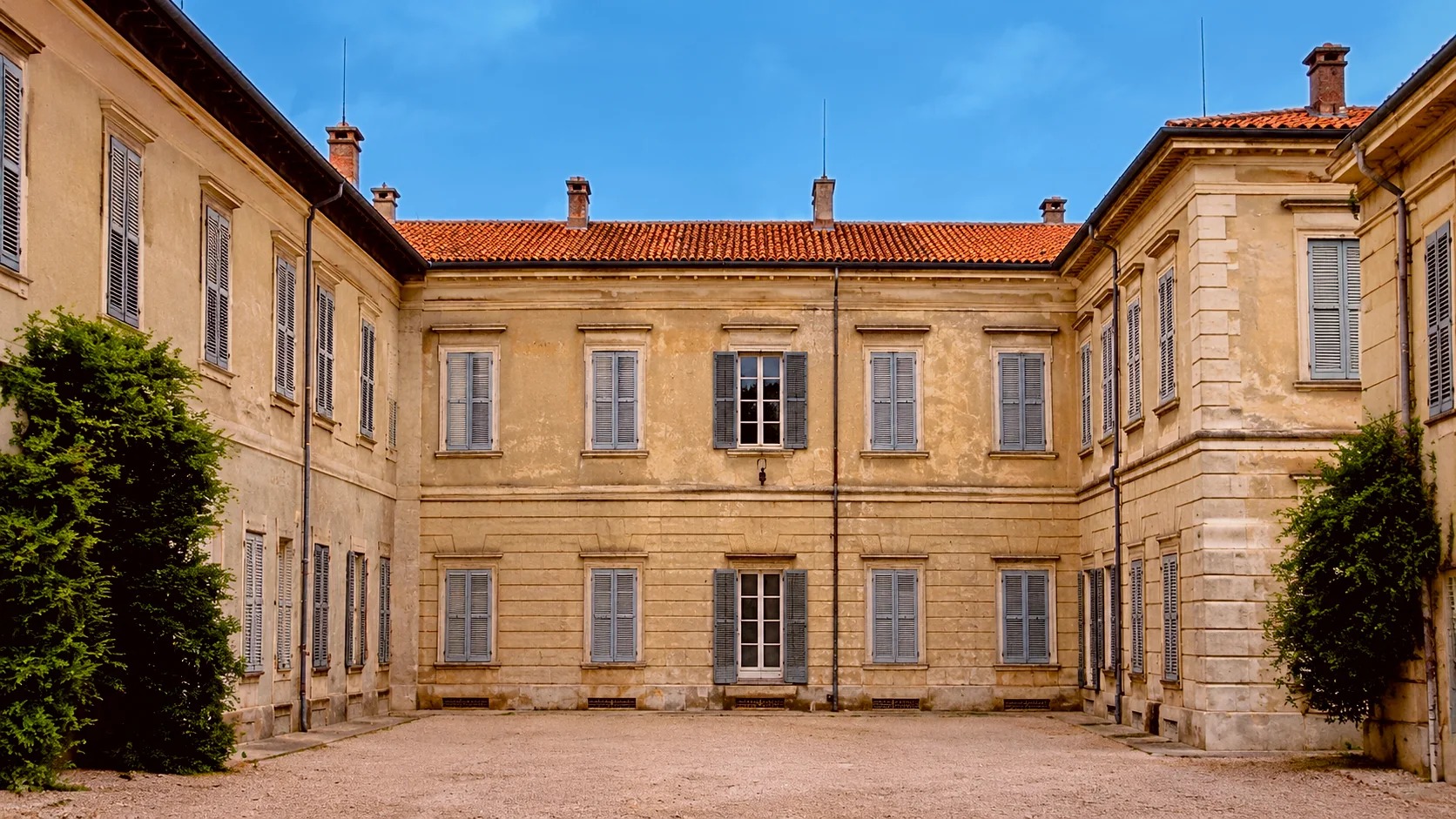
The Lombardy Region's catalogue of cultural heritage dates the building to the seventeenth and eighteenth centuries. A central block and two wings frame an open courtyard, a layout found in many villas of Brianza.
A nineteenth-century source mentions the Arrigoni coats of arms, painted or carved in the house. to be verified on site
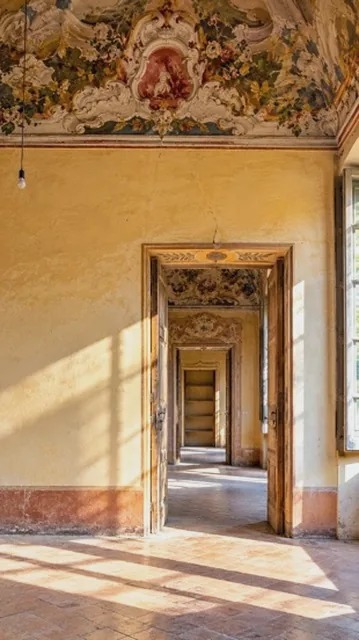
On the first floor the rooms open one into the next. Above them are coffered ceilings painted in tempera, and frescoes of music-making putti and garlands of flowers. In one room, life-size telamons seem to hold up the ceiling.
Who painted them, and when, is one of the first questions the restoration will need to answer.
The historical and artistic report attached to the listing decree describes a park of about twelve thousand square metres, laid out in the English landscape style. Cedars, magnolias, yews and plane trees mark its seasons.
The same report identifies its greatest value: the perspective view. From the far end of the park the eye travels across the lawn to the façade. It is the heart of the villa's landscape, and we want to restore it.
Next door stands Villa Gnecchi, formerly Confalonieri. It has its own history and its own protection. The similar names often lead to confusion.
We tell only what the sources document. Where the story has a gap, we say so, and we keep looking.
The oldest name is Villa Airoldi. In the first half of the seventeenth century the property passed to the Arrigoni marquesses, who held it for about two centuries and left their coats of arms here. The maps of the Catasto Teresiano already record it in 1721.
In 1824 it was bought by Giacomo Ruscone. On his death in 1842 it passed to his nephews Giuseppe and Carlo Gnecchi, who, as he had wished, also took his surname. It was the first home of the Gnecchi Ruscone in Verderio, a family that would give the village mayors, schools and public works.
Much of the villa's twentieth century is still to be pieced together. We know how it ends: with a long period of abandonment, when the house was no longer lived in and began to suffer.
In 2026 the villa found new guardians. The work begins with what is most urgent: studying the documents and protecting the building, as the heritage regulations provide.
The property passes from the Airoldi to the Arrigoni marquesses.
The villa appears on the maps of the Catasto Teresiano, owned by the Arrigoni.
Period of construction given in the regional catalogue.
Giacomo Ruscone buys the villa and its land from Marquess Decio Arrigoni.
His nephews Giuseppe and Carlo Gnecchi inherit the estate and the Ruscone surname.
The family estate is divided. The villa passes to Antonio Gnecchi Ruscone.
Changes of ownership, use and form, still being researched.
The villa and its park are declared of particularly important historic and artistic interest.
Verderio Superiore and Verderio Inferiore merge to form the Municipality of Verderio.
The villa finds new guardians. The work of study and protection begins.
Do you have documents, photographs or memories of the villa? Write to us. Every contribution will be credited.
These images are design visualisations. Archive photographs and photographs of the restoration will have sections of their own.
We do not want a villa shut away behind a gate, nor one changed beyond recognition. We want a historic house that is of use to its village again, and is conserved because of it.
Today the work is to make the building safe, with temporary and reversible measures, within the permissions that heritage protection requires.
Alongside this, we are gathering documents, surveys and first-hand accounts. They are the basis of every decision to come.
Here we publish real photographs, each with its date. They show the villa as it is and the work of each day, with no retouching that alters its condition.
The project will take shape only with the necessary permissions. Our commitments, however, are already clear.
Halt the decay, then restore. Every intervention will be studied with the Soprintendenza (the State heritage authority) and begun only with its authorisation.
A place of culture open to the public, in the frescoed rooms: to tell the story of the villa, of the families who lived there and of Verderio.
Spaces for hospitality and gathering. They give the villa a daily life and the means to look after itself over time, without depending on others.
A historic park to care for and to bring back into the life of the village, in the ways and at the pace its protection allows.
A bridge between the history of the villa and the life of Verderio. Not an enclosure.
We will announce each step once it has been decided and authorised. The Friends of the Villa will be the first to know.
A villa of the seventeenth and eighteenth centuries, an English landscape park, plaster and stone that time has made unique. Less than an hour from Milan, the villa welcomes a limited number of photo shoots, campaigns and film productions.
The proceeds support the conservation of the villa.
Railings, cypresses, the piano nobile with its balcony. For outdoor portraits and campaigns.
A symmetrical backdrop of warm plaster and shutters. For lookbooks and full-length shots.
About twelve thousand square metres in the English manner, a great cedar, open lawns. For campaigns and video.
Enfilades of rooms and painted ceilings, accessible once declared safe. For editorials and portraits.
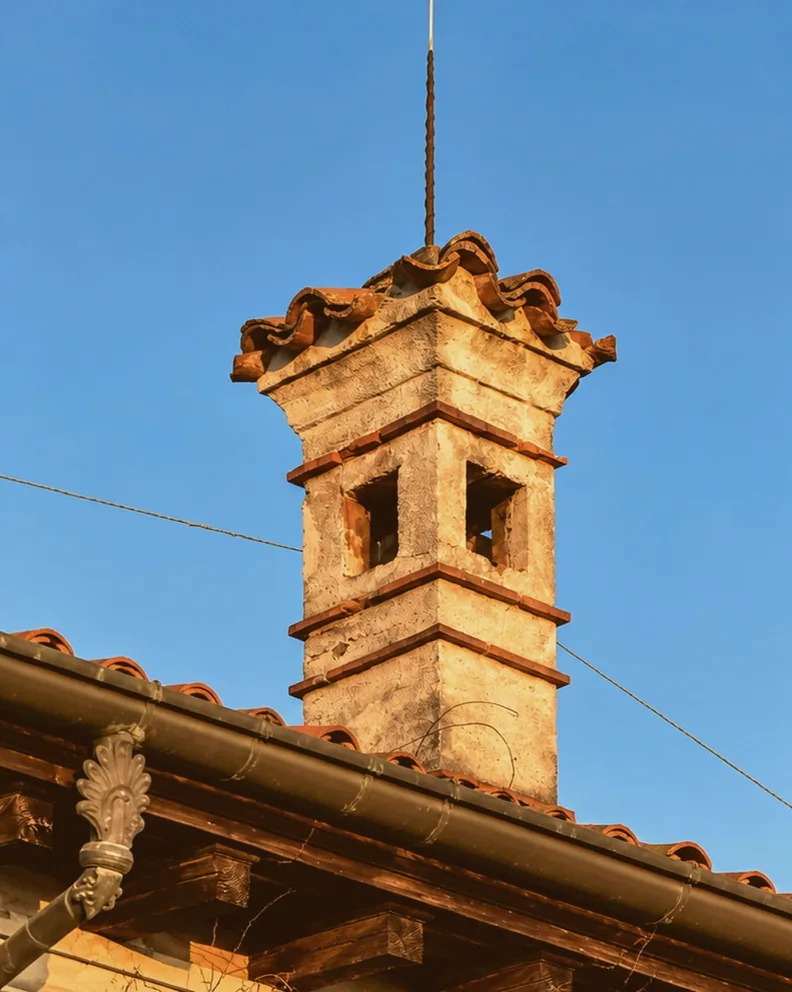
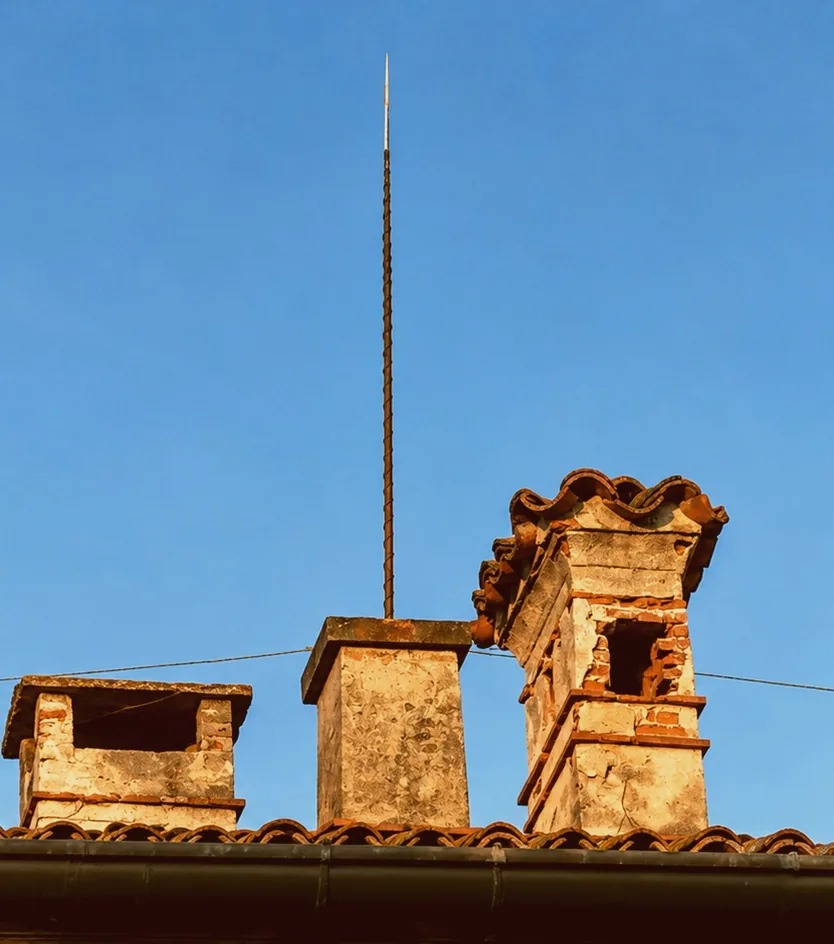
Stone, roof tiles, copper, wood. For accessories, jewellery and still life.
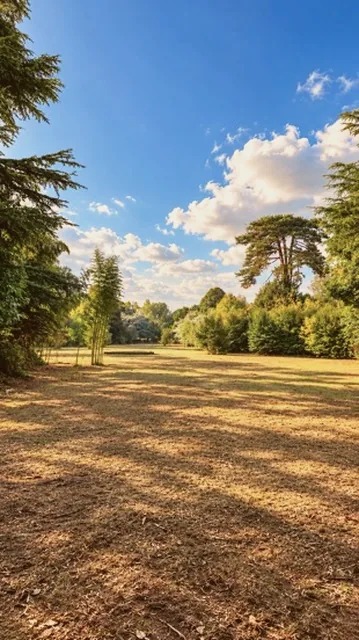
Golden afternoons in the park, sunset over the chimneys. The best hours are listed in the album.
The images give an indication of the spaces and may differ from their current condition. The full album, with a sheet for each setting, is sent once the request has been assessed.
You tell us about the project, the dates and the team.
We check that the production is compatible with the protection of the villa. We reply within a few working days.
A visit with the production team, to look at the spaces, the light and the logistics.
A record of the condition of the spaces on arrival and on departure. One of our team is always present.
We consider every request personally. The more detail you give us, the more precise our answer will be.
Verified facts, a short history, images on request. Everything you need to write with accuracy.
Villa Gnecchi Arrigoni is a Brianza residence built between the seventeenth and eighteenth centuries, with an English landscape park of about twelve thousand square metres. Owned in turn by the Airoldi, the Arrigoni marquesses and, from 1842, the Gnecchi Ruscone, it has been protected by the State since 2007. After a long period of abandonment, it found new guardians in 2026. The project aims to conserve it and to open it, one step at a time, to the life of Verderio.
This text may be reproduced freely, with credit to the source.
High-resolution images, with credits and captions, are available on request.
A family can look after a villa. To keep it alive for generations, it needs something that outlasts any one family.
That is why we are establishing the Villa Gnecchi Arrigoni Foundation: a non-profit body devoted to the villa's conservation, to opening it to the public and to its cultural life.
The owning family looks after the villa. It provides for its daily care and makes it available to the Foundation's projects.
It directs resources to conservation, research, openings and activities for the local community. It accounts publicly for every contribution and how it was used.
They support the Foundation through the Italian "5 per mille" tax allocation or a donation, and follow its work closely.
As soon as the Foundation is established and entered in Italy's national register of non-profit bodies, you will be able to support it in two ways.
It costs nothing. Italian taxpayers simply sign their tax return and enter the Foundation's tax code.
Of any amount, with the tax benefits Italian law provides for non-profit bodies.
We will publish the tax code, bank details and accounts here. Until then, we are not raising funds.
Public accounts, a report on the 5 per mille, and accounts kept separate from the family's. The Friends of the Villa will always know where their support goes.
Short studies of the villa and its village. Each Notebook cites its sources.
A way to stay close to its history and its future.
You will receive news of the restoration, new Notebooks and, once they are confirmed, the first opportunities to visit the villa. Joining is free, and you can leave with a single click.
Joining is free. Those who wish will be able to support the villa's Foundation once it has been established.
For research and documents, for the press, for cultural proposals. If you have photographs or memories of the villa, we would be glad to receive them.
The villa is not open to the public. The first opportunities to visit will be announced here and to the Friends of the Villa.
Data controller. The owners of Villa Gnecchi Arrigoni, Piazza Sant'Ambrogio 2, 23879 Verderio (LC), Italy. The controller's full identification details are provided to anyone who requests them through the Contact form or by post to that address.
Data collected. Only the data you enter in the site's forms (name, email, organisation, message and stated preferences) and the technical browsing data strictly needed to run the service.
Purposes and legal basis. Replying to your requests (Art. 6(1)(b) GDPR); sending Friends of the Villa updates, only with your consent (Art. 6(1)(a)), which you may withdraw at any time; keeping the site secure (Art. 6(1)(f)).
Provider and place of processing. The site and its forms run on Wix.com Ltd, acting as data processor. Data may also be processed outside the European Union, with the safeguards set out in Articles 44 to 49 GDPR, as described in Wix.com's privacy policy.
Retention. Requests are kept for as long as needed to handle them and no longer than 24 months. Friends of the Villa membership lasts until you withdraw consent.
Cookies. The site uses no analytics and no profiling cookies. It uses only the technical cookies and storage needed to run the site and send the forms.
Your rights. Access, rectification, erasure, restriction, portability, objection and withdrawal of consent (Articles 15 to 22 GDPR), by writing through the Contact form. You may lodge a complaint with the Italian data protection authority, the Garante per la protezione dei dati personali (garanteprivacy.it).
Last updated: 31 October 2026. The Italian text prevails.
The images published on this site are design visualisations (renderings) produced for illustrative purposes only. They do not reproduce the current state of the property. They do not represent works carried out, authorised or approved.
The property is declared of cultural interest under Legislative Decree (D.Lgs.) no. 42 of 22 January 2004. Every intervention is subject to the prior authorisation of the competent Soprintendenza (the State heritage authority), under article 21 of the same decree. The solutions shown may be changed, reduced or not carried out, in whole or in part, without notice.
The images do not constitute an offer to the public under article 1336 of the Italian Civil Code (Codice civile). They do not constitute a solicitation to invest, nor a promotional communication for goods or services. No right, reliance or claim may be based on their content.
The architectural, decorative and furnishing elements shown imply no historical or artistic attribution, nor any dating. These rest solely on the sources cited on the History page.
The texts, photographs, design visualisations, graphics, the name in use and the symbol of Villa Gnecchi Arrigoni published on this site belong exclusively to the owners of the villa or their successors in title. They are protected by Italian Law no. 633 of 22 April 1941 on copyright and by the Italian Industrial Property Code (Legislative Decree no. 30 of 10 February 2005). © 2026 Villa Gnecchi Arrigoni. All rights reserved.
Without written authorisation the following are prohibited, in whole or in part: reproduction, systematic downloading, modification, publication on other websites, social networks or in print, and any commercial, advertising, editorial or promotional use. In particular, the images may not be used to present the villa as a location, to associate it with brands, products, events or initiatives, or to suggest a relationship with the owners that does not exist.
The owners expressly reserve text and data mining of the content of this site, under Article 70-quater of Italian Law no. 633/1941 and Article 4 of Directive (EU) 2019/790. Automated collection of the content and its use to train or feed artificial intelligence systems are prohibited. This reservation is also expressed in machine-readable form.
The villa, courtyard and park are private property. Photography and filming on the premises are permitted only with the owners' written authorisation, on the terms set out on the Productions page.
Short extracts of the texts may be quoted for reporting, criticism or study, within the limits of Article 70 of Italian Law no. 633/1941, with the credit "© Villa Gnecchi Arrigoni" and a link to this site. For high-resolution press images, please write through the Contact page.
Any unauthorised use will be pursued before the competent authorities, including claims for damages. These terms are governed by Italian law.
Last updated: October 2026.
This translation is provided for convenience; the Italian text prevails.